
Helpful Resources

How to upsize into a bigger home
Free Seller's Guide
Comprehensive Real EstateSeller's Guide
Rainwater Capture System vs. Well Water System
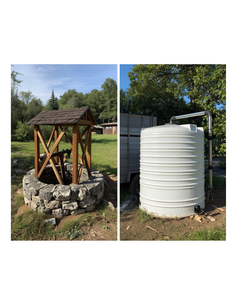
A Practical Comparison for Texas Landowners
Choosing the right water source is one of the most important decisions for rural and acreage properties in Central Texas. Below is a clear comparison of Rainwater Capture Systems and Well Water Systems, highlighting the benefits, maintenance considerations, and long‑term impacts of each.
Water Quality
-
Rainwater: Naturally soft, low in minerals, and free of chlorine and fluoride. No scale buildup in pipes or appliances.
-
Well Water: Quality varies by aquifer; often contains minerals such as iron, sulfur, and hardness that affect taste and require treatment.
Need for Water Softening
-
Rainwater: No softener needed.
-
Well Water: Softener or filtration is commonly required.
Drinking Water Treatment
-
Rainwater: Typically does not require reverse osmosis.
-
Well Water: RO systems or additional filtration are often necessary.
Monthly Water Cost
-
Both: No monthly water bills.
Maintenance Access
-
Rainwater: All components are above ground, easy to access, and simple to maintain.
-
Well Water: Pumps and components are underground, making repairs more difficult and costly.
Energy Use
-
Rainwater: Lower energy use; relies on gravity collection and a surface pressure pump.
-
Well Water: Higher energy use due to electric submersible pumps.
Maintenance & Repair Costs
-
Rainwater: Generally low; standard components. (Historical cost: under $200/year from 2014–2025.)
-
Well Water: Can be high if the pump, casing, or underground infrastructure fails.
System Complexity
-
Rainwater: Simple, modular, and easy to expand.
-
Well Water: More complex underground infrastructure.
Water Pressure
-
Rainwater: Consistent pressure with modern commercial‑grade pumps.
-
Well Water: Requires a pressure tank; pressure fluctuations are common.
Scalability
-
Rainwater: Easy to add tanks and increase storage capacity.
-
Well Water: Increasing capacity requires drilling deeper or adding another well.
Environmental Impact
-
Rainwater: Reduces aquifer depletion and stormwater runoff.
-
Well Water: Draws from groundwater aquifers shared with surrounding properties.
Water Security
-
Rainwater: Dependent on rainfall but supported by on‑site storage; not affected by neighbors’ water use.
-
Well Water: Dependent on aquifer levels, nearby wells, and regional development.
Water Volume
-
Rainwater: Based on tank capacity and rainfall.
-
Well Water: High volume when aquifer is strong; limited when aquifer is low.
Landscaping Use
-
Rainwater: Ideal for plants—chlorine‑free.
-
Well Water: May require treatment depending on mineral content.